When you compare two 5-inch frames on a store page, they can look almost identical: carbon plates, four arms, four motor mounts. But the True-X vs Stretched-X decision hides underneath that first impression, and it quietly defines how your drone balances, how it behaves at speed, and even which spare arms you need to keep on the bench. Frame layout is not a cosmetic detail. It is the geometric foundation that every other component sits on.
In this article, we will break down what frame layout actually means, compare True-X and Stretched-X in practical terms, look at where layouts like Dead Cat fit in, and explain why a True-X frame is the smartest starting point for a first build.
What Frame Layout Actually Means
Most 5-inch FPV drones use a quad layout: four arms, each carrying one motor. The layout describes where those four motors sit relative to the center of the frame. Connect the four motor shafts with imaginary lines, and the shape you get is the layout.
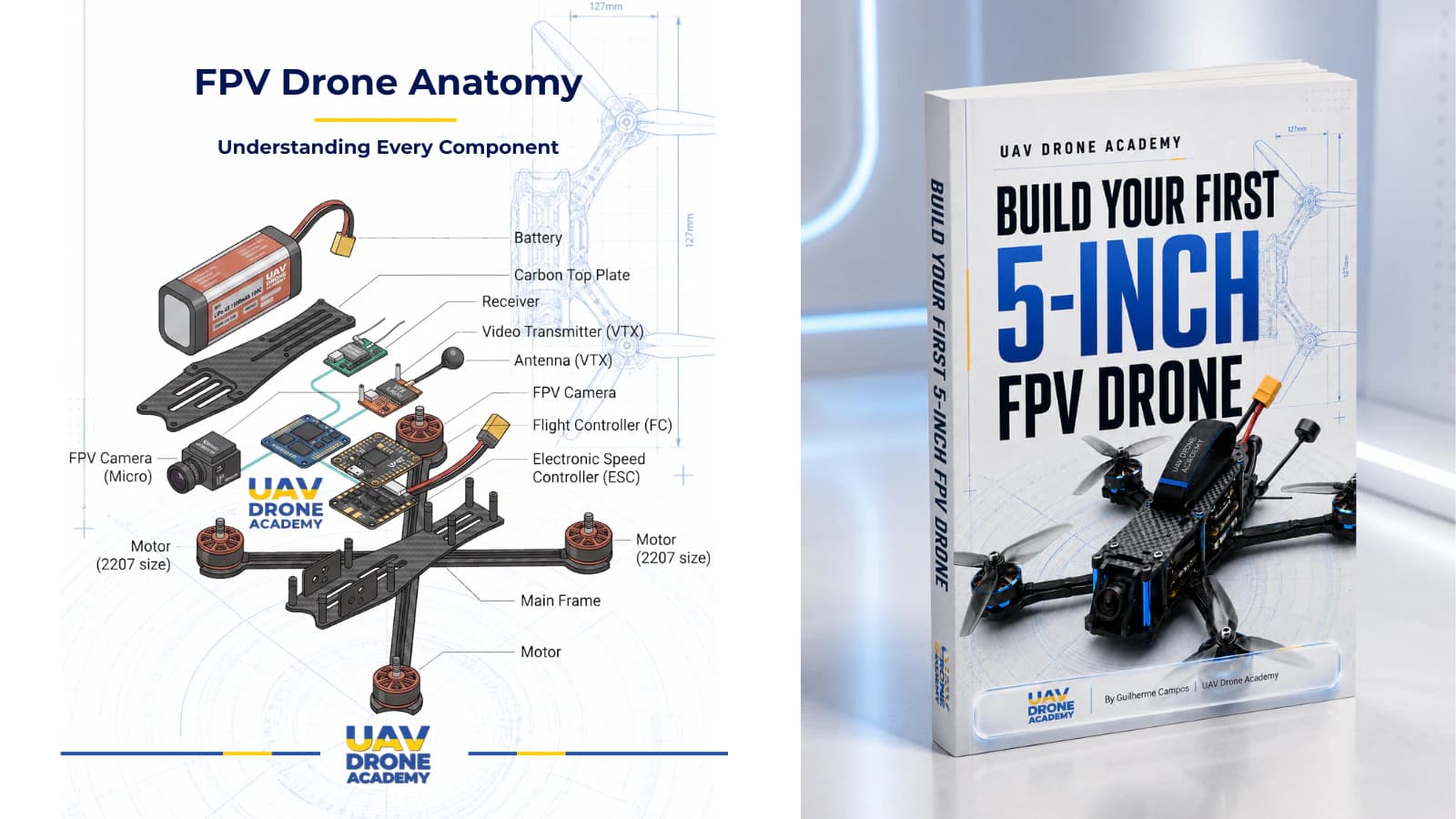
That shape matters more than beginners expect. The motor positions define the drone's moments of inertia around the pitch and roll axes, which means they define how much torque is needed to rotate the aircraft in each direction. As covered in FPV Drone Anatomy: Understanding Every Component, the frame is the mechanical skeleton of the entire system. The layout is the blueprint of that skeleton.
Here is the part most people miss: the flight controller does not know your frame geometry. Betaflight assumes a reasonably symmetric quad by default. The further your layout drifts from that assumption, the more the default tune has to compensate. That single fact explains most of the practical differences between layouts.
True-X: The Balanced Square
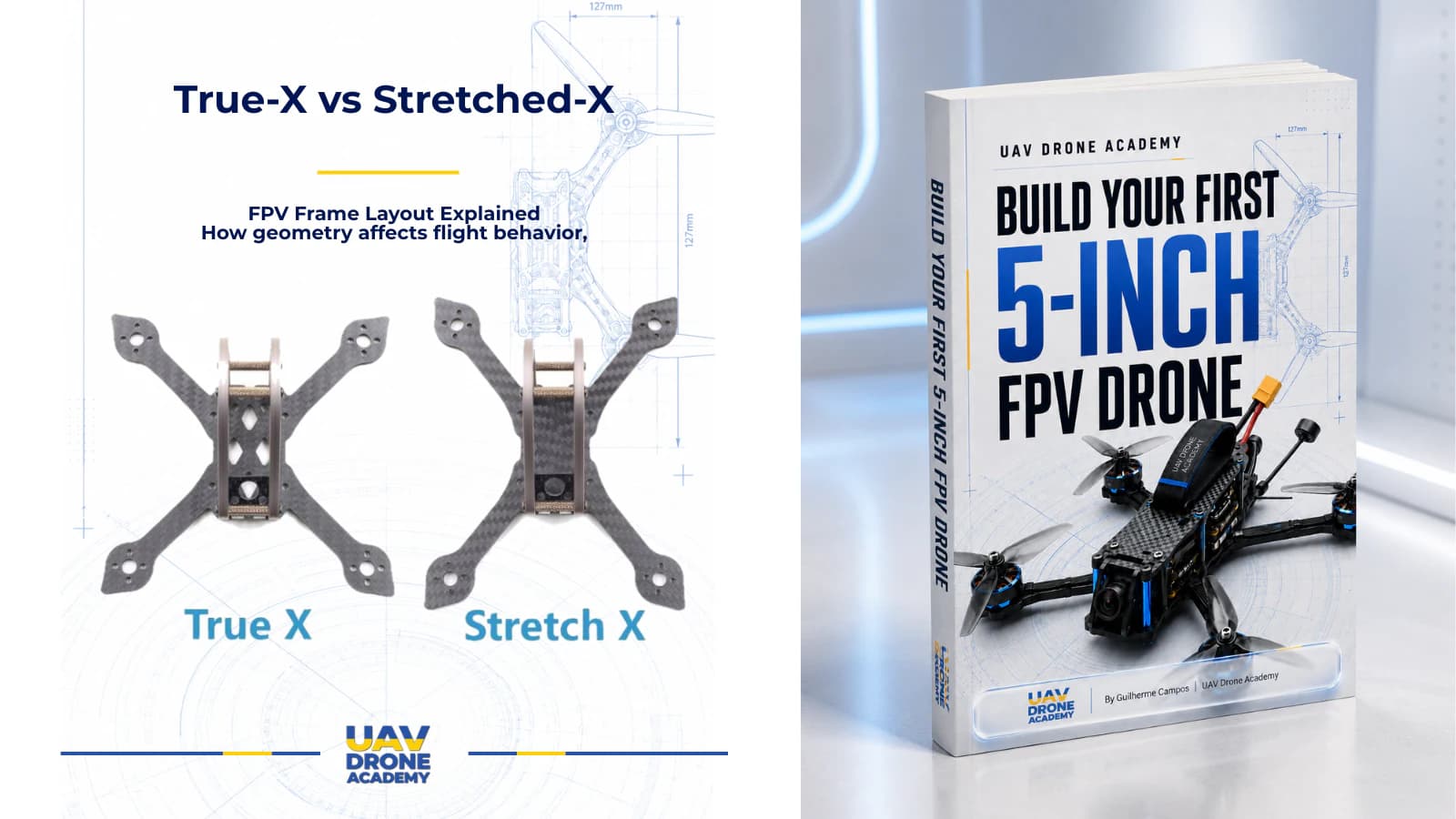
In a True-X layout, all four arms are the same length. The four motors form a perfect square, and the center of the frame sits exactly in the middle of that square.
This symmetry has direct consequences on the bench and in the air:
- Pitch and roll feel identical. The moment of inertia is the same on both axes, so the drone responds with the same authority whether you push the stick forward or sideways.
- Default tunes just work. Betaflight's stock PID values were built around symmetric quads. A True-X frame flies well on defaults, which removes an entire category of beginner frustration.
- One arm fits everywhere. Front-left, rear-right, it does not matter. You stock one spare arm type, and any crash repair uses the same part.
From an engineering perspective, True-X is the neutral reference design. There is no hidden bias in the geometry, so when something feels wrong in flight, you can trust that the cause is a component or a setting, not the frame shape itself. For a beginner diagnosing their first problems, that predictability is worth a lot.
Stretched-X: Built for Forward Speed
A Stretched-X layout keeps the X shape but makes the rear arms longer than the front arms. The motor pattern becomes a rectangle stretched along the direction of flight, shifting the rear motors further behind the center of mass.
Why would anyone deliberately break the symmetry? Racing. When a quad pitches forward and accelerates, the front propellers churn the air and leave turbulence behind them. On a True-X frame at high forward speed, the rear props fly partially inside that dirty air, which reduces their efficiency and can introduce oscillations. Stretching the rear arms moves the rear props out of the front props' wake, so they bite into cleaner air.
The result is better stability and efficiency in sustained fast forward flight, exactly the condition that dominates a race track. But the trade-offs are real:
- Pitch response no longer matches roll response, so the drone needs a tune adjusted for the asymmetry.
- Front and rear arms are different parts, which doubles your spare-parts inventory.
- Weight distribution shifts rearward, and battery placement becomes more sensitive to keep the center of gravity where the flight controller expects it.
None of this is a problem for an experienced racer who tunes their own quad. All of it is friction for a first build.
True-X vs Stretched-X: Side-by-Side Comparison
| Characteristic | True-X | Stretched-X |
|---|---|---|
| Arm length | All four equal | Rear arms longer |
| Motor pattern | Perfect square | Rectangle stretched rearward |
| Pitch vs roll response | Identical | Asymmetric |
| Default Betaflight tune | Flies well as-is | Usually needs adjustment |
| Rear prop airflow at speed | Partially disturbed | Cleaner |
| Best use case | Freestyle, learning, all-around | Racing, sustained forward speed |
| Spare arms needed | One type | Two types (front and rear) |
| Beginner friendliness | High | Moderate |
The pattern is clear: Stretched-X trades everyday simplicity for a performance edge in one specific flight condition. True-X gives up that edge to stay predictable everywhere else.
What About Dead Cat and Other Layouts?
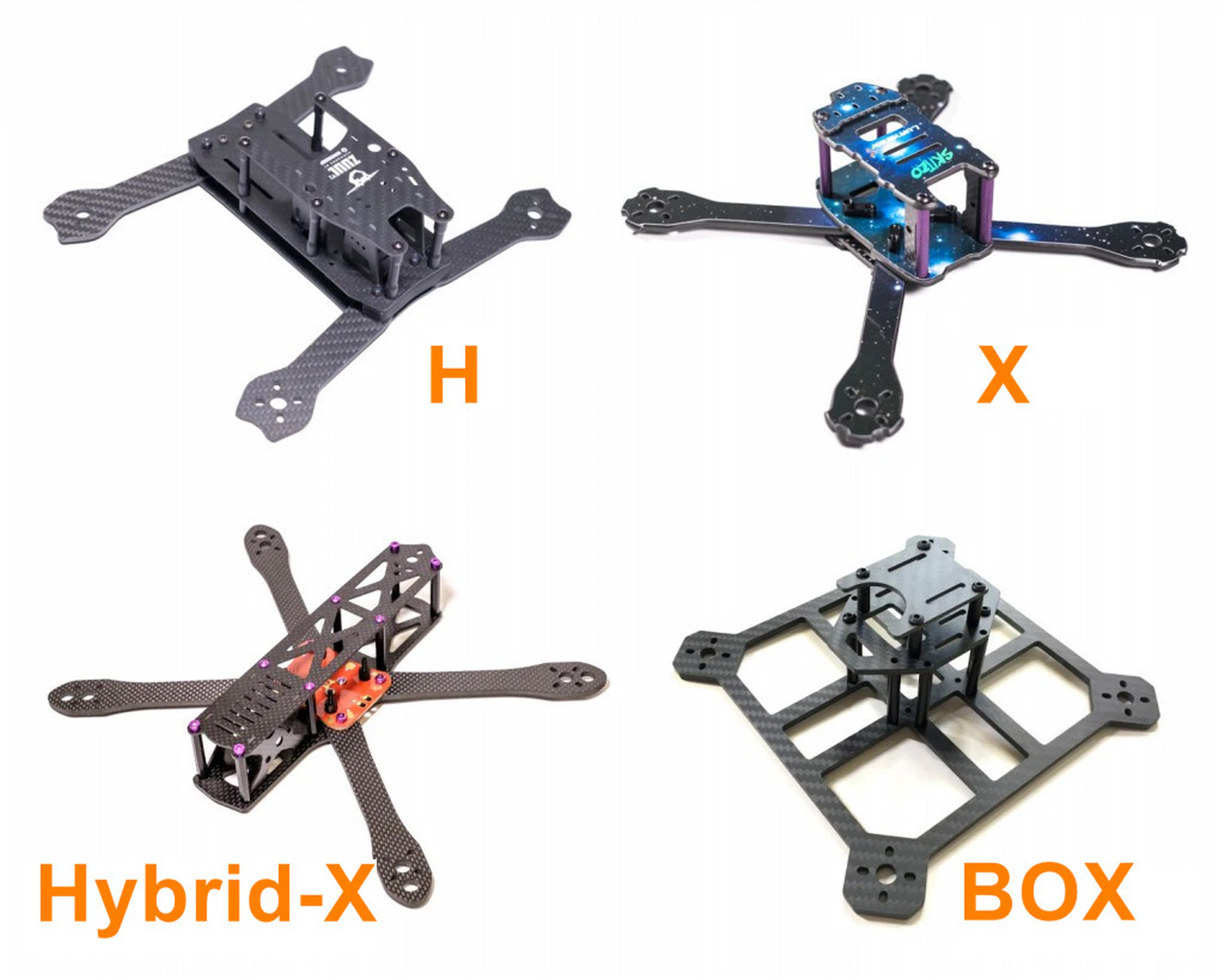
If you browse frames long enough, you will run into a third geometry: Dead Cat. In this layout, the front arms are swept outward and forward at a wider angle, pushing the front motors apart. The goal has nothing to do with racing. It moves the front propellers out of the camera's field of view, which is why Dead Cat geometry dominates cinematic builds where prop-free footage is the priority.
Dead Cat inherits the same asymmetry costs as Stretched-X: uneven pitch and roll behavior, different front and rear arms, and a tune that needs attention. You will also see H-frames and box-style layouts on long-range and payload builds. Every one of these is a deliberate engineering trade, sacrificing symmetry to gain something specific: clean footage, straight-line speed, or mounting space.
Why True-X Is the Right Choice for a First Build
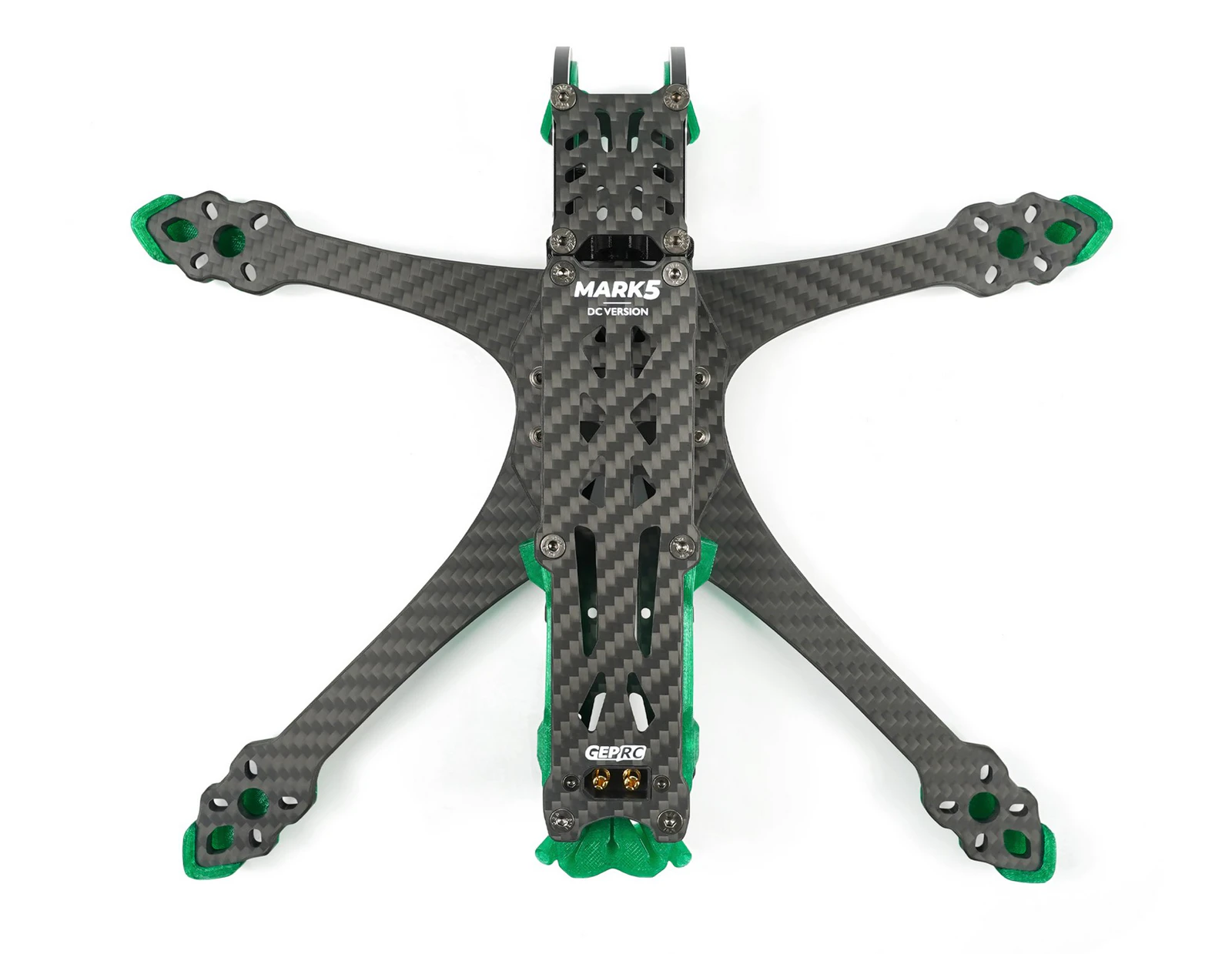
For a first 5-inch build, this series uses a True-X layout, and the reasoning is systemic rather than sentimental.
A first build is a learning platform. Every asymmetry you add to the airframe adds a variable you have to account for later, during tuning, during troubleshooting, and during repairs. True-X removes those variables. The drone balances naturally, the default software configuration matches the hardware geometry, and when you inevitably crack an arm on an early flight, the replacement is the same part no matter which corner took the hit.
There is also the community factor. True-X is the most common layout in FPV, especially in the freestyle scene, so nearly every tutorial, preset, and troubleshooting thread assumes it. When your hardware matches what the community flies, their answers apply to your build directly. If you are still deciding on a specific frame, Best 5-Inch FPV Frame for Beginners covers durability, stack compatibility, and replaceable arms in detail, and once the frame is in your hands, How to Assemble a 5-Inch FPV Frame Step by Step walks through the full mechanical assembly.
Choose the geometry that removes problems, not the geometry that promises performance you cannot use yet.
Stretched-X is not a wrong answer. It is the right answer to a question a beginner is not asking yet. When you eventually build a dedicated race quad, the stretched layout will make sense because you will feel the exact problem it solves.
Frequently Asked Questions
What is the difference between True-X and Stretched-X frames?
True-X frames have four equal-length arms, so the motors form a perfect square with symmetric pitch and roll behavior. Stretched-X frames use longer rear arms, moving the rear motors back to give the rear propellers cleaner air during fast forward flight.
Is True-X or Stretched-X better for freestyle?
True-X is generally better for freestyle. Its symmetric geometry makes pitch and roll respond identically, which suits the constantly changing orientations of freestyle flying, and it performs well on default Betaflight tunes.
Why do racing drones use Stretched-X frames?
At high forward speed, the front propellers disturb the air flowing toward the rear propellers. Stretching the rear arms moves the rear props out of that turbulent wake, improving stability and efficiency in the sustained forward flight that dominates racing.
What is a Dead Cat frame layout?
A Dead Cat layout sweeps the front arms outward and forward so the front propellers sit outside the camera's field of view. It is popular for cinematic builds where clean, prop-free footage matters more than symmetric handling.
Conclusion.
The True-X vs Stretched-X decision comes down to what you are optimizing for. Stretched-X buys straight-line composure for racers who tune their own machines. True-X buys balance, predictable handling, interchangeable spare arms, and compatibility with nearly every tutorial and default setting in the FPV ecosystem. For a first build, that second list is exactly what you need. Master the symmetric platform first; the specialized geometries will still be there when you have a reason to want them.